 Image 1 of 1
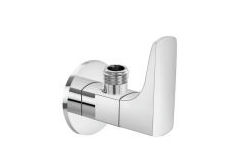
An angle cock (also called an angle stop or service stop) is a plumbing valve commonly used to control water flow to fixtures such as toilets, sinks, and dishwashers. It’s designed for installation at the fixture inlet and provides a compact, easy-to-access shutoff point for maintenance or emergency shutoff.
Key features
Angle configuration: Inlet and outlet ports meet at roughly a 90-degree angle, allowing close installation where piping approaches a fixture from the wall.
Shutoff function: Quarter-turn or multi-turn options allow the valve to fully stop or partially throttle flow.
Connection types: Available with compression fittings, sweat (solder) connections, female or male threaded ends, and push-fit assemblies to suit various plumbing systems.
Materials: Commonly made from brass, chrome-plated brass, or stainless steel for corrosion resistance and durability.
Sizes: Typical residential sizes include 1/2" and 3/8" connections; commercial sizes vary.
Common uses
Toilet supply lines (angle cock often located behind the toilet tank)
Lavatory and bathroom sink supply lines
Bidet and hand-shower connections
Appliance shutoffs (dishwasher, ice maker) when an angle-configured connection is needed
Installation notes
Position the valve so the handle is easily reachable for quick shutoff.
For sweat connections, use proper soldering technique and flux to ensure a leak-free joint.
Use thread sealant tape or pipe dope on threaded connections when recommended by the manufacturer.
Avoid over-tightening compression fittings to prevent damage to the ferrule or valve body.
Test for leaks after installation by pressurizing the line and inspecting joints.
Maintenance and troubleshooting
If a valve becomes stiff, apply gentle penetrating lubricant to the stem; repeatedly operate the valve to restore movement.
Replace the valve if it leaks at the inlet/outlet or around the stem; many angle cocks are inexpensive and straightforward to swap out.
For frozen or corroded valves in older systems, consider replacing with a modern quarter-turn ball-style angle stop for easier operation.
Selection tips
Match inlet/outlet connection types and sizes to your existing plumbing.
Choose quarter-turn ball valves for reliability and fast shutoff.
For exposed fixtures, pick a valve with an attractive finish (chrome or polished brass).
Confirm pressure and temperature ratings for the intended application.
If you’d like, provide the valve connection sizes and fixture type, and I can recommend specific angle cock options and installation guidance tailored to your setup.
An angle cock (also called an angle stop or service stop) is a plumbing valve commonly used to control water flow to fixtures such as toilets, sinks, and dishwashers. It’s designed for installation at the fixture inlet and provides a compact, easy-to-access shutoff point for maintenance or emergency shutoff.
Key features
Angle configuration: Inlet and outlet ports meet at roughly a 90-degree angle, allowing close installation where piping approaches a fixture from the wall.
Shutoff function: Quarter-turn or multi-turn options allow the valve to fully stop or partially throttle flow.
Connection types: Available with compression fittings, sweat (solder) connections, female or male threaded ends, and push-fit assemblies to suit various plumbing systems.
Materials: Commonly made from brass, chrome-plated brass, or stainless steel for corrosion resistance and durability.
Sizes: Typical residential sizes include 1/2" and 3/8" connections; commercial sizes vary.
Common uses
Toilet supply lines (angle cock often located behind the toilet tank)
Lavatory and bathroom sink supply lines
Bidet and hand-shower connections
Appliance shutoffs (dishwasher, ice maker) when an angle-configured connection is needed
Installation notes
Position the valve so the handle is easily reachable for quick shutoff.
For sweat connections, use proper soldering technique and flux to ensure a leak-free joint.
Use thread sealant tape or pipe dope on threaded connections when recommended by the manufacturer.
Avoid over-tightening compression fittings to prevent damage to the ferrule or valve body.
Test for leaks after installation by pressurizing the line and inspecting joints.
Maintenance and troubleshooting
If a valve becomes stiff, apply gentle penetrating lubricant to the stem; repeatedly operate the valve to restore movement.
Replace the valve if it leaks at the inlet/outlet or around the stem; many angle cocks are inexpensive and straightforward to swap out.
For frozen or corroded valves in older systems, consider replacing with a modern quarter-turn ball-style angle stop for easier operation.
Selection tips
Match inlet/outlet connection types and sizes to your existing plumbing.
Choose quarter-turn ball valves for reliability and fast shutoff.
For exposed fixtures, pick a valve with an attractive finish (chrome or polished brass).
Confirm pressure and temperature ratings for the intended application.
If you’d like, provide the valve connection sizes and fixture type, and I can recommend specific angle cock options and installation guidance tailored to your setup.